Every year, thousands of students across India sign admission forms, pay hefty fees, and spend three to four years at colleges that were never worth their time in the first place. Some graduate with degrees that carry no weight with employers. Others discover mid-course that their college’s affiliation is disputed, or that the placements they were promised never materialised.
The hard truth is that India has over 45,000 colleges — and a significant number of them are coasting on false promises, outdated infrastructure, and aggressive marketing. Knowing how to identify a bad college in India before you pay the first instalment is one of the most valuable things you can do for your future.
Here are 10 concrete red flags that should make you pause, ask harder questions, or walk away entirely.
Red Flag 1: No NAAC Accreditation or a Low Grade
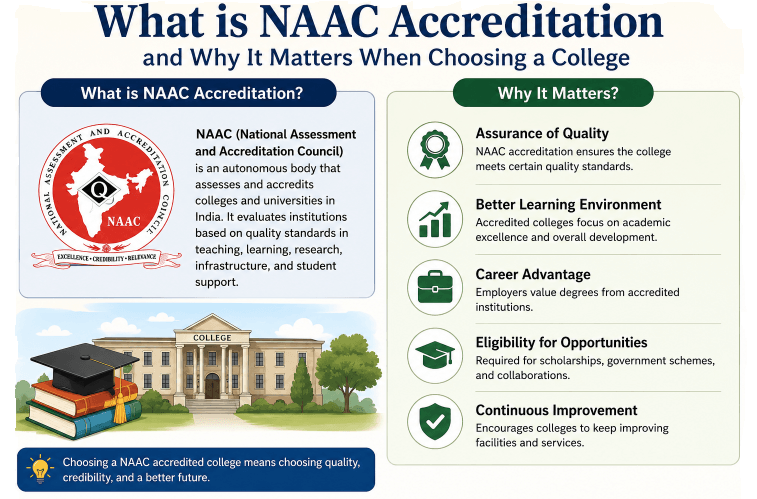
NAAC accreditation is the most basic quality stamp a college can earn in India. If a college has never applied for accreditation — or holds a grade of C or below — it is telling you something important about how seriously it takes its own quality.
Colleges with no NAAC accreditation are ineligible for several UGC funding schemes, cannot easily obtain autonomous status, and may not be accepted by some government job recruiters or foreign universities as a credible institution.
Even more concerning: some colleges display an outdated or lapsed NAAC grade on their website, hoping applicants will not check the validity date. Always verify on naac.gov.in — not on the college brochure.
What to do: Check the NAAC portal directly. Confirm the grade, the CGPA, and whether the accreditation is currently valid. Aim for B++ minimum; A or above is ideal.
Red Flag 2: Inflated Placement Claims With No Proof
This is perhaps the most common college scam in India — and the hardest to catch until it is too late. Colleges routinely advertise placement statistics that are either cherry-picked, unverified, or simply invented.
Watch out for these specific tactics:
- Advertising only the highest package (e.g., “₹42 LPA package”) while hiding that it went to one student out of 300
- Counting internship stipends as placements
- Listing company logos of firms that visited campus once, years ago, for a pre-placement talk — not an actual hiring drive
- Claiming “100% placement assistance” rather than 100% placement — these are very different things
- Providing placement numbers that do not distinguish between core roles and off-campus referrals
What to do: Ask the placement cell for branch-wise, year-wise data with company names and median CTC. Then independently verify by searching those company names on LinkedIn and looking for alumni from that college in those roles.
Red Flag 3: Faculty Vacancies and High Turnover
A college that cannot retain qualified faculty is a college with problems beneath the surface — poor management, delayed salaries, a toxic work culture, or a chronic inability to attract credible academics.
Signs of a faculty problem include:
- A large proportion of visiting or contract faculty filling permanent positions
- The same two or three faculty names appearing across multiple unrelated departments on the website
- Faculty profiles with no qualifications listed, or qualifications from unrecognised institutions
- Current students or alumni mentioning that “we barely had proper teachers” in online reviews
- A significant number of faculty listed on the website who no longer work there — a sign the website itself has not been updated, reflecting poor management
What to do: Ask specifically for the permanent faculty list with their UGC-NET/Ph.D. qualifications. Cross-check a few names on Google Scholar or LinkedIn to verify they actually exist and work there.
Red Flag 4: Pending University Affiliation or Recognition
This is a situation that has derailed thousands of students across India. A college begins admitting students while its affiliation with a recognised university is still pending, provisional, or disputed. Students complete one or two years before discovering that their coursework may not be credited, or their degree may not be awarded by a valid university.
This is especially common with:
- Newly established private colleges in tier-2 and tier-3 cities
- Colleges claiming affiliation to a newly formed or unrecognised deemed university
- Colleges that were de-affiliated from one university and are “in the process” of affiliating to another
- Institutions advertising an MOU with a foreign university as a substitute for legitimate domestic affiliation
What to do: Check UGC’s official list of recognised universities at ugc.gov.in. For professional courses, verify AICTE approval at aicte-india.org. Ask the college for the current affiliation letter from the affiliating university — a legitimate college will have no problem sharing this.
Red Flag 5: Poor Online Reviews Across Multiple Platforms
One bad review is noise. Consistent, specific, repeated complaints across multiple platforms over multiple years is a pattern — and patterns are data.
| Platform | What to Look For |
|---|---|
| Google Maps | Star rating below 3.5, recent reviews (last 12 months), repeated complaints about specific issues |
| Shiksha.com | Course-specific reviews, placement honesty ratings, faculty ratings |
| Collegedunia.com | Infrastructure reviews, detailed alumni feedback |
| Quora | Search “[College Name] honest review” — Quora threads tend to be candid |
| Where are the alumni actually working? What roles and which companies? | |
| YouTube | Search “[College Name] review” — student vlog reviews are often very direct |
Be alert to suspiciously perfect reviews as well — a college with 500 five-star Google reviews and no critical feedback whatsoever is likely managing its reputation rather than earning it. Real student feedback is always mixed.
What to do: Spend 20 minutes across at least three platforms. Look for recurring themes in the criticism — complaints about the same thing from multiple people, across multiple years, are almost always rooted in a genuine institutional problem.
Red Flag 6: Pressured Admission Process and Sudden Fee Changes
Legitimate colleges follow a structured, transparent admission calendar. They do not need to pressurise you. If you encounter any of the following, treat it as a serious fake college warning sign in India:
- “Last few seats remaining” — told to every prospective student, every week, for months
- Being asked to pay full fees in cash immediately to “block your seat” before any official receipt is issued
- The fee structure in the offer letter differs from what was quoted during counselling
- Additional charges surfacing after admission — development fees, library deposits, uniform purchases — that were not disclosed upfront
- Being told the fee is non-refundable even before the official admission cut-off date passes
- No written communication — everything discussed verbally with no documentation
What to do: Demand a complete written fee breakup before paying anything. Know your rights under UGC’s fee refund policy — if you cancel before the official admission closure date, you are entitled to a refund of all but a small processing fee.
Red Flag 7: No Functioning Placement Cell
A placement cell is not just a room with a coordinator’s nameplate on the door. A functioning placement cell has a dedicated team, an active recruiter database, a structured pre-placement training calendar, and documented outcomes for previous batches.
Signs that a placement cell exists only on paper:
- The coordinator cannot name more than three or four companies that visited in the last year
- There is no pre-placement training programme — no aptitude prep, no mock interviews, no resume workshops
- Alumni on LinkedIn show no correlation between their college and their employer — suggesting most found jobs entirely on their own
- The placement cell’s contact number on the website goes unanswered
- Students from the same course in senior batches are working in completely unrelated fields at entry-level positions that do not require a degree
What to do: Ask to speak directly with a second or third-year student — not a student ambassador selected by the college — and ask them frankly about placement preparation and outcomes.
Red Flag 8: Dilapidated Infrastructure or No Lab Access
Campus infrastructure is difficult to fake during a physical visit. The condition of a college’s labs, classrooms, and common areas tells you exactly how much the management reinvests in the institution versus how much it extracts from it.
Look for these during your campus visit:
- Labs with outdated or broken equipment that students are not allowed to operate freely
- Computer labs with mismatched, slow machines running outdated software on expired licences
- Library shelves with books published before 2010 as the primary resource, and no digital database access
- Classrooms with non-functional projectors, peeling walls, poor ventilation
- A campus that looks well-maintained near the entrance and reception area but deteriorates significantly in teaching blocks and hostels — a common tactic to impress during college fairs
What to do: Always visit the campus yourself, unannounced if possible. Ask to see the labs, library, and hostel — not just the auditorium and admin block. A good college will have nothing to hide.
Red Flag 9: No Student Clubs, Fests, or Activities
A campus without cultural fests, technical clubs, sports competitions, or student bodies is not just boring — it is a symptom of poor institutional culture and disengaged management.
Active extracurricular life matters because:
- It develops communication, leadership, and teamwork skills that classrooms cannot replicate
- It indicates that students are engaged and retained, not simply enduring their time on campus
- Intercollegiate participation builds networks and exposes students to peers from other strong institutions
- Employers — especially in management, media, and consulting — actively look for this evidence on CVs
A college that does not support any student-led activity is often one where management discourages student agency — which rarely stops at fests.
What to do: Check the college’s Instagram or Facebook page. If the most recent post is from six months ago, or if all posts are administrative notices with no event photos or student content, that is telling. Ask current students which clubs are active and when the last fest was held.
Red Flag 10: College Is Not Listed in UGC/AICTE Database
This is the most serious red flag on this list — and the one that should be an automatic deal breaker. If a college is not listed in the official government database of recognised institutions, its degree carries no legal standing in India.
India has a documented problem with fake universities. The UGC periodically publishes a list of self-styled, unrecognised “universities” operating illegally — some of them with impressive-sounding names, professional websites, and expensive marketing campaigns.
For professional courses, the relevant bodies to verify with are:
| Course Type | Regulatory Body | Verification URL |
|---|---|---|
| All Degrees (General) | UGC | ugc.gov.in |
| Engineering / Tech / MBA | AICTE | aicte-india.org |
| Medical (MBBS / BDS) | NMC / DCI | nmc.org.in / dciindia.org.in |
| Law | Bar Council of India | barcouncilofindia.org |
| Pharmacy | Pharmacy Council of India | pci.nic.in |
| Architecture | Council of Architecture | coa.gov.in |
| Nursing | Indian Nursing Council | indiannursingcouncil.org |
What to do: Look up the college on every relevant regulatory portal. If it is absent from even one body it should be registered with, do not proceed with admission until you receive a satisfactory written explanation.
How to Verify a College Is Legitimate in India
Run every shortlisted college through this five-point verification checklist before paying a single rupee:
- NAAC Status — naac.gov.in → confirm grade and validity date
- UGC Recognition — ugc.gov.in → “Approved Institutions” → search college/university name
- Statutory Body Approval — AICTE / NMC / BCI depending on your course
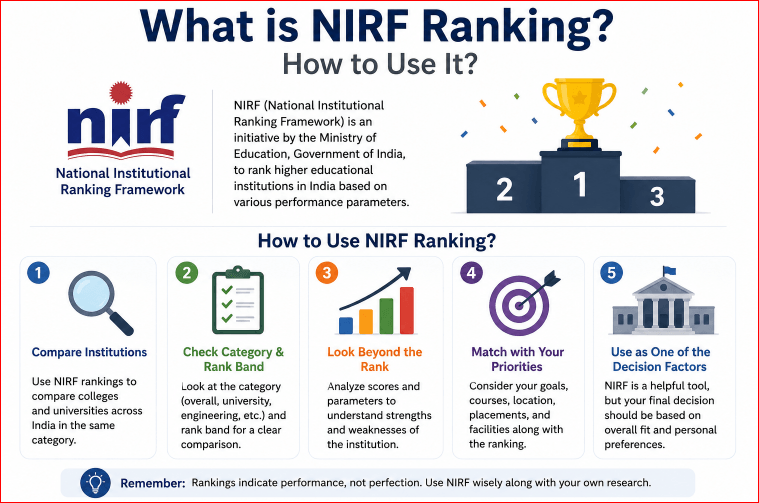
- NIRF Listing — nirfindia.org → search the college name (absence is a yellow flag, not a dealbreaker, but worth noting)
- LinkedIn Alumni Audit — Search the college name on LinkedIn, filter by alumni, and check where graduates actually work and at what level
If a college passes all five checks, it is a legitimate institution. Whether it is the right institution for you still requires a campus visit, a placement data review, and an honest conversation with current students.
What to Do If You Already Joined Such a College
If you recognise several of these red flags in a college you have already enrolled in, you are not without options. Here is how to think through your situation practically:
If you are in the first semester: You may still be within the UGC refund window. Review UGC’s fee refund policy circular — colleges are required to refund fees (minus a small processing charge) if you withdraw before the official last date of admission. Contact the UGC directly if the college refuses.
If you are one or two years in: Transferring to another college mid-course is possible in many universities through lateral entry or migration provisions. Check your university’s academic regulations. This requires strong academic scores and sometimes an entrance process, but it is a real path worth exploring.
If you are completing your final year: Focus on what you can control. Build skills through certifications (Coursera, NPTEL, Google, AWS), pursue competitive exams (UPSC, CAT, GATE, banking), build a strong LinkedIn profile with internship experience, and network with industry professionals independently. Many students from mid-tier colleges have built strong careers through deliberate self-investment alongside their degree.
If the college is operating fraudulently — withholding certificates, refusing refunds illegally, or running without valid affiliation — you can file a complaint with the UGC Grievance Portal at ugc.gov.in, the National Consumer Helpline (1800-11-4000), or your state’s Higher Education Department.
Choosing the wrong college is a costly mistake — but it is almost always a preventable one. The information you need to make a good decision is publicly available, free, and accessible in under an hour of careful research. The red flags listed here are not rare exceptions — they are patterns that repeat across hundreds of institutions every year.
Trust the data, verify every claim, visit the campus in person, and listen to what current students say when no one from the administration is in the room. That combination will protect you from 90% of bad college decisions before they happen.
Latest Blog Post






How to Choose the Right College After 12th in India
06 Jun, 2026